
Climate Change Litigation in India:
An Emerging Frontier in Environmental LAW
(2026)
Climate change litigation has rapidly emerged as a vital and evolving domain within Indian environmental law. Indian courts, particularly the Supreme Court and the National Green Tribunal (NGT), are increasingly interpreting constitutional provisions, environmental statutes, and international commitments to enforce accountability for climate inaction, hold governments responsible for policy failures, and protect vulnerable populations from adverse climate impacts.
Definition and Scope of Climate Change Litigation in India.

In the Indian context, climate change litigation includes public interest litigations (PILs), writ petitions, and appeals before the Supreme Court, High Courts, and the NGT that directly or indirectly address the causes, governance, or consequences of climate change. These cases typically seek:
Enforcement of India’s commitments under the Paris Agreement and other international frameworks;
Accountability for inadequate mitigation or adaptation measures by the Union and State governments;
Remedies for climate-related harms, including those from extreme weather, biodiversity loss, and ecosystem degradation;
Protection of fundamental rights under Articles 14 (equality) and 21 (right to life and personal liberty) of the Constitution, now explicitly encompassing the right to be free from the adverse effects of climate change.
According to the Global Climate Litigation Report: 2025 Status Review by the United Nations Environment Programme (UNEP) and the Sabin Center for Climate Change Law at Columbia Law School, India recorded 14 climate-related cases in 2025 (up from 11 in 2023), focusing on issues such as air pollution, deforestation, renewable energy obligations, climate adaptation, and the constitutional right to a clean and healthy environment. Globally, cumulative cases reached 3,099 across 55 jurisdictions as of mid-2025, with India emerging as a key player in the Global South.
Key Developments in 2025–2026
The 2025–2026 period has seen heightened judicial engagement amid India’s balancing act between rapid development, renewable energy targets, and climate vulnerability.
Landmark Supreme Court Recognition of Climate Rights.
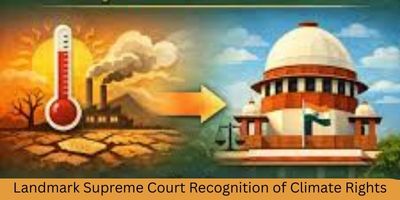
In M.K. Ranjitsinh & Ors. v. Union of India (ongoing, with significant orders in 2024–2025), the Supreme Court explicitly recognized the “right to be free from the adverse effects of climate change” as integral to fundamental rights under Articles 14 and 21. Originating from a PIL on conserving the critically endangered Great Indian Bustard amid solar and wind projects, the Court balanced biodiversity protection with renewable energy deployment. In a December 2025 judgment, it provided regulatory clarity for projects in priority habitats (e.g., Rajasthan and Gujarat), constituting expert committees and easing certain restrictions to align conservation with India’s climate commitments.
Youth-Led and Systemic Challenges: Ridhima Pandey Case.
The landmark Ridhima Pandey v. Union of India (Civil Appeal No. 388 of 2021) continues to progress. Initiated in 2017 by a young petitioner before the NGT (alleging government inaction on climate mitigation), the case was appealed to the Supreme Court after NGT dismissal. In February 2025, the Court issued notice and impleaded eight central ministries (including Environment, Power, and Coal) to foster coordinated governance and address “siloed” approaches. It criticized inadequacies in existing frameworks like the Environment (Protection) Act, 1986, and directed affidavits on carbon reduction roadmaps. Further hearings in 2025 emphasized enforceable climate-centric mandates, signaling potential for broader judicial oversight.
Other Notable Trends
Rising PILs before the NGT and Supreme Court on air pollution, deforestation, and renewable project impacts, often invoking intergenerational equity and the public trust doctrine.
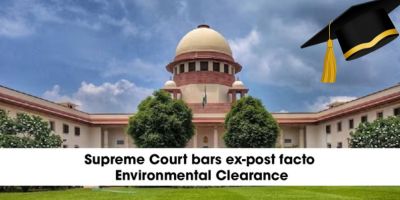
- Cases challenging ex-post facto environmental clearances (e.g., reversals and reviews in 2025 judgments), highlighting tensions between development and prior environmental safeguards.
- Integration of climate considerations into administrative decisions, with courts urging reassessment of statutes for explicit climate obligations.
- These developments reflect growing judicial willingness to treat climate governance as a constitutional imperative, influenced by global advisory opinions (e.g., ICJ’s 2025 opinion on state obligations).
Landmark Cases in Indian Climate Litigation.
- M.K. Ranjitsinh & Ors. v. Union of India (2024–2025 orders) — Recognized the right against adverse climate effects under Articles 14 and 21; balanced conservation with renewable energy.
- Ridhima Pandey v. Union of India (ongoing) — Youth-led challenge to government inaction; Supreme Court directions for inter-ministerial coordination and policy synergy.
- Foundational precedents like Vellore Citizens Welfare Forum v. Union of India (1996) and MC Mehta series — Established principles of sustainable development, precautionary principle, and polluter pays, now extended to climate contexts.
Challenges and Emerging Opportunities.
- Indian climate litigation faces hurdles such as:
- Lack of comprehensive national climate legislation, leading to reliance on fragmented environmental laws;
- Evidentiary challenges in proving causation and attribution;
- Balancing rapid economic growth and renewable targets with adaptation needs.
- Nevertheless, progressive rulings drive accountability, foster innovation in rights-based approaches, and complement India’s Nationally Determined Contributions under the Paris Agreement.
Relevance for Law Students and Emerging Practitioners.
Climate change litigation in India offers rich interdisciplinary study involving constitutional law, environmental statutes, administrative procedure, human rights, and international obligations. It provides avenues for practical involvement through PIL drafting, research with NGOs, amicus interventions, and internships at bodies like the NGT or climate-focused think tanks.
Conclusion.
As India confronts escalating climate vulnerabilities—extreme weather, water stress, and biodiversity loss—courts are becoming pivotal in advancing justice and accountability. The field is poised for further growth in 2026, testing theories of intergenerational equity, state responsibility, and rights-based climate governance. For aspiring lawyers, it represents a dynamic area of academic inquiry, advocacy, and societal impact in one of the world’s most climate-vulnerable nations.
climate change litigation, climate litigation cases, climate change law, climate justice, climate lawsuits, environmental law india, air pollution act in india, environment act in india, air pollution laws in india, environment regulation in india, Climate justice India, Green litigation India, latest environmental laws in india